How to Fix a Dripping Faucet (Step-by-Step DIY)

That slow drip… drip… from the kitchen tap isn't just keeping you up — over a year it's litres down the drain and money on your Calgary water bill. The good news: most drips come from a worn part inside the faucet that costs a few dollars and an hour to replace. Here's how to find the source and fix it, step by step.
Find the drip before you buy parts
Where the water shows up tells you which part to replace:
- Dripping from the spout when the faucet is off → worn cartridge, washer, or valve seat inside the body.
- Leaking from around the base of the handle → an O-ring on the cartridge or stem.
- Water pooling under the faucet at the sink deck → loose connections or a failing seal where the faucet mounts.
- A leak from the supply line underneath → tighten the compression nut, or replace the flexible supply line (a cheap, easy swap).
Pin down the source first — while the water is still on — and you'll buy the right part once instead of guessing twice.
First, shut off the water
Before anything comes apart:
- Close the shut-off valves under the sink — turn both (hot and cold) clockwise until snug.
- Open the faucet to release pressure and confirm the water's off. No flow means you're good.
- Plug the drain with a rag so no small parts disappear down it.
If there are no valves under the sink, shut off the main and note that as a job worth adding a fixture valve later — having a local shut-off makes every future repair faster.
A quick word on tools: you'll want a set of screwdrivers (flat and Phillips), an adjustable wrench or channel-lock pliers, an Allen key set for handle set-screws, and a small dish to keep parts in order as they come off. Lay them out in the sequence you remove them and reassembly becomes obvious.
Know your faucet type
What's inside decides what you replace:
- Cartridge faucet (most modern single-handle and many two-handle taps) — a cylindrical cartridge controls flow. A worn one is the most common drip cause, and Calgary's hard water speeds that wear by leaving mineral scale on the seals.
- Compression faucet (older two-handle) — uses rubber washers that flatten and leak.
- Ball or ceramic-disc — common in single-handle kitchen taps; uses springs, seals, or a disc cartridge.
In older Calgary homes — a 1960s bungalow in Haysboro or Acadia, say — you'll still find compression taps in basement bathrooms and laundry sinks, while most newer Calgary builds in communities like Mahogany use cartridges throughout.
Take a photo of the brand and model before you start — it makes buying the right part far easier.
Take it apart and find the worn part
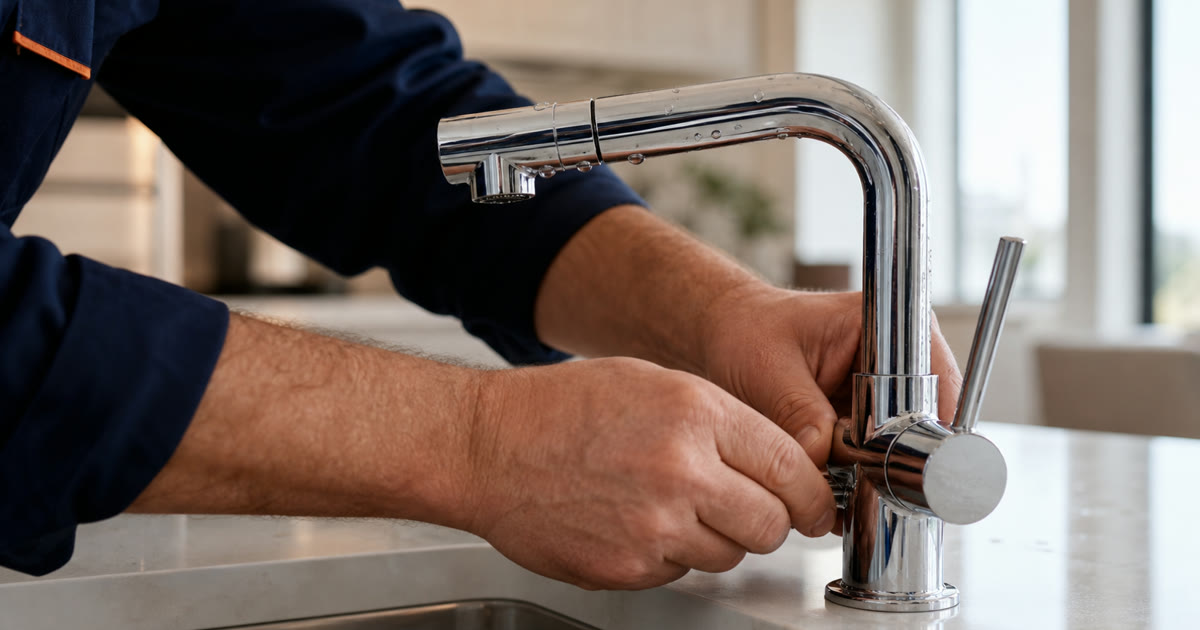
- Pry off the decorative cap on the handle to reach the screw.
- Remove the handle screw and lift the handle off.
- Unthread the retaining nut or clip holding the cartridge or stem.
- Pull the cartridge or stem straight out. If it's stuck, Calgary's hard water has probably scaled it in place — a cartridge puller or a soak with a vinegar-soaked rag around the housing helps, rather than forcing it.
- Inspect the rubber O-rings and washers. Look closely at each one — cracked, flattened, or hardened parts are your leak.
Replace and reassemble
- Bring the old cartridge or washer to the hardware store and match it exactly.
- Smear a little faucet-safe silicone grease on new O-rings.
- Wipe white scale out of the faucet body with a vinegar-dampened cloth before the new part goes in. On Calgary water, a gritty seat can chew up a fresh cartridge's seals quickly.
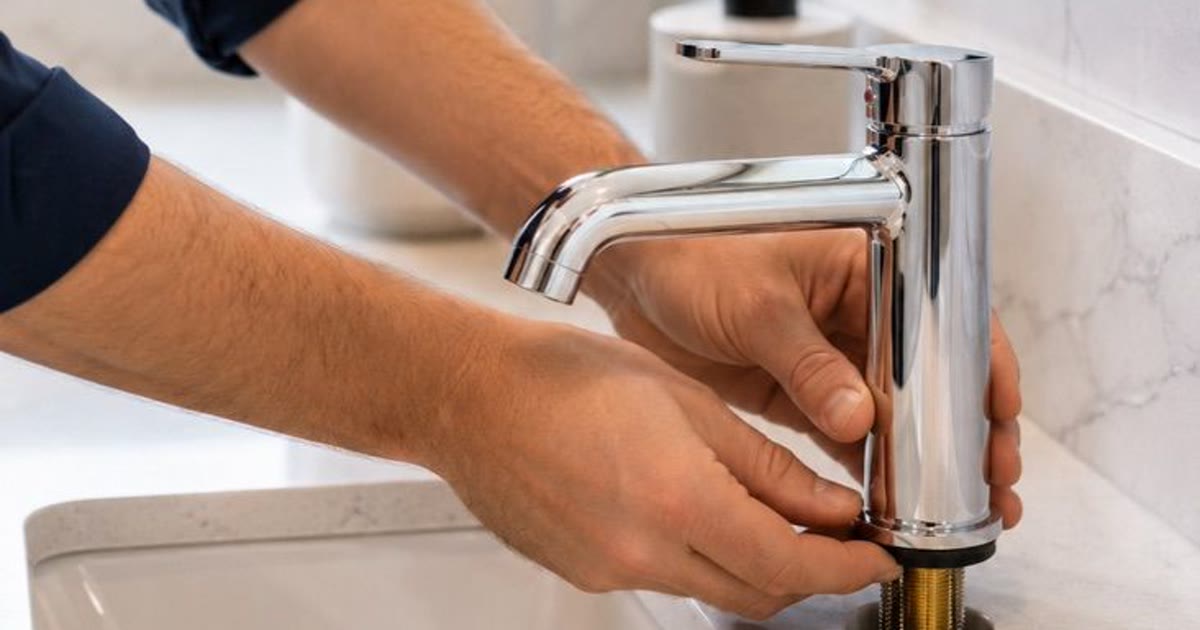
- Seat the new part the same way the old one came out (orientation matters on cartridges).
- Reassemble in reverse, hand-tighten, then turn the water back on slowly and check for drips.
Quick tip: when you have the faucet apart, swap every rubber part you can see, not just the obvious one — O-rings, seals, and washers. They're pennies, and you do not want to redo the whole job in three months because one tired ring let go. While you're at it, unscrew the aerator on the spout and soak it in vinegar too — in Calgary it's usually half-blocked with scale.
Related Calgary Home Guides
- First Frost in Calgary: The Deadline for Your Outdoor Faucet
- Frozen Outdoor Faucet: Hidden Damage You Won't See Until Spring
- Outdoor Faucet Leaking After Winter? A Calgary Spring Checklist
Frequently Asked Questions
Why does my faucet keep dripping after I turn it off?
A drip from the spout when the tap is off almost always means a worn cartridge, washer or valve seat inside the faucet body. In Calgary, hard-water scale speeds up that wear by roughening the seals. Replacing the worn part usually stops the drip.
How do I know which cartridge to buy for my faucet?
Photograph the faucet's brand and model before you start, then take the old cartridge or washer to the hardware store and match it exactly. Cartridges look similar but vary between brands and models. Orientation matters too, so note how the old one came out.
Do I need to shut off the main water to fix a dripping faucet?
Usually not. Close the two shut-off valves under the sink by turning them clockwise, then open the faucet to confirm the water is off. If there are no valves under the sink, shut off the main and consider adding local shut-offs later.
What if my faucet still drips after I replace the cartridge?
The valve seat inside the faucet body may be worn or pitted, or the faucet may be corroded enough that full replacement makes more sense. Our technician can assess it and replace the cartridge or the faucet itself.
When to call a Calgary pro
Water lines inside the wall are a job for a specialized company, but for the faucet itself, YOFF replaces cartridges and faucets without the trips to the hardware store. Worth calling if:
- The drip continues after a new cartridge — the valve seat may be worn or pitted.
- A shut-off valve under the sink leaks or won't close.
- The faucet body is corroded and a full replacement makes more sense.
Drip won't quit, or you'd rather skip the disassembly? YOFF faucet and cartridge repair gets it sealed across Calgary. Get a free quote — No Fix — No Fee.
Rather have YOFF handle it?
We cover faucets and more across Calgary and nearby communities — booked fast, done right. No Fix — No Fee.