Low Water Pressure at the Tap: Causes and Quick Fixes
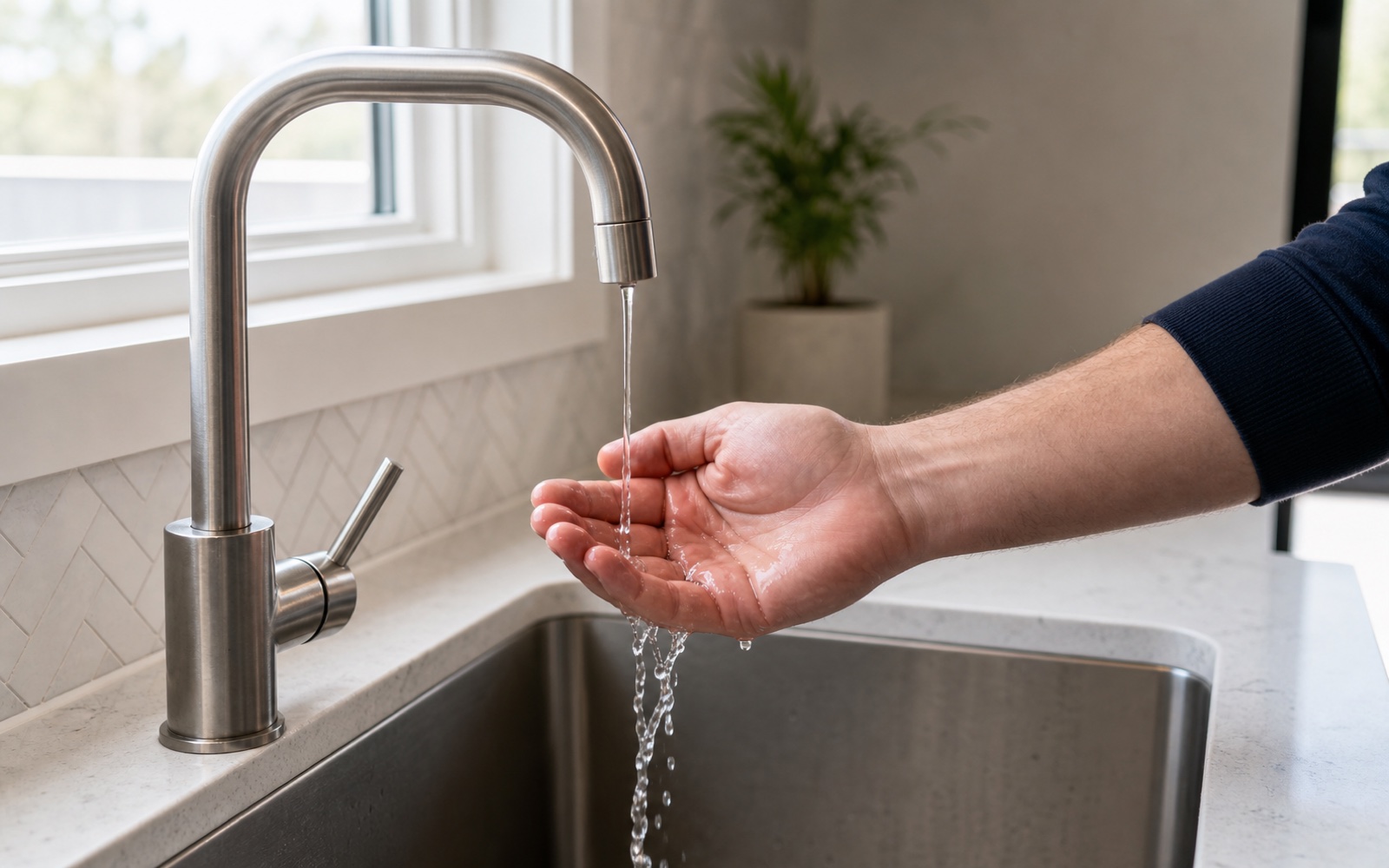
Weak flow at the kitchen tap turns every quick task into a slow one, and in Calgary it's one of the most common faucet complaints we hear. Before you assume the worst, know that most low-pressure issues trace to one small, cheap part — and you can often fix it in ten minutes. The first question is the one that points you straight at the cause.
One tap, or the whole house?
This single check narrows it down fast:
- Just one faucet is weak → the problem is almost always at that fixture — a clogged aerator or cartridge. Easy DIY.
- Every tap in the house is weak → the issue is upstream: the main supply, a pressure regulator, or the building side. Bigger job, and often one for a specialized company.
Check both hot and cold at the slow tap too. If only the hot side is weak, suspect the water heater or a hot-side valve; if both are equal, it's the fixture.
Quick fixes for one weak faucet
1. Clean the aerator (start here)
The aerator is the little screen at the tip of the spout. Calgary's hard water leaves mineral scale that clogs it — the most common cause of weak flow by far.
- Unscrew the aerator by hand (or with tape-wrapped pliers).
- Soak it in white vinegar for 30–60 minutes to dissolve the scale.
- Brush it clean, rinse, and screw it back on.
If flow jumps right back, you're done.
2. Clear the cartridge or check the supply valves
- Half-open shut-off valves under the sink throttle flow. Make sure both are fully open.
- A clogged or worn cartridge can restrict flow on a single-handle tap — debris from work on the line often lodges there. Pulling and rinsing or replacing it usually clears it.
3. Check the showerhead the same way
Showers lose pressure to scale too. Unscrew the head, soak it in vinegar, and clear the spray holes — or tie a bag of vinegar around it overnight. While you're at it, check that any flow-restrictor disc inside the head isn't packed with mineral grit; a gentle clean (don't remove it entirely) often restores the spray.
4. Look for a kinked or pinched supply line
The flexible braided line that feeds the faucet can get crimped when items are crammed into the cabinet below. Pull everything out, follow the line from the valve to the faucet, and straighten any sharp bend. A pinched line throttles flow just like a half-closed valve, and it's the easiest thing in the world to overlook.
Hot side weak, cold side fine?
If only the hot water runs slow, the trail leads somewhere different:
- Sediment in the water heater. That same hard water leaves mineral buildup in the tank that can restrict hot flow. Flushing the tank annually helps.
- A partly closed hot-side shut-off at the water heater or under the sink.
- Scale in the hot supply line, which builds faster on the hot side than the cold.
If both hot and cold are equally weak at one tap, skip all this — it's the fixture, and the aerator is your first stop.
Quick tip: Calgary's hard water is the quiet culprit behind most slow taps and showerheads. A vinegar soak of every aerator and showerhead once or twice a year keeps the flow strong and saves you thinking something's seriously wrong.
Related Calgary Home Guides
- Calgary Hard Water: How to Stop Calcium from Killing Your Faucets
- Basement Floor Drain Smell in Calgary? Causes and a Quick Fix
- Basement Water Seepage Calgary: 7 Early Warning Signs
Frequently Asked Questions
Why is the water pressure low at only one tap?
When just one faucet is weak, the cause is almost always at that fixture. A mineral-clogged aerator is the most common culprit in Calgary, followed by a clogged cartridge, a half-open shut-off valve under the sink, or a kinked supply line.
How do I clean a faucet aerator?
Unscrew it by hand or with tape-wrapped pliers, soak it in white vinegar for 30 to 60 minutes, brush it clean, rinse, and screw it back on. If the flow jumps back right away, the aerator was the problem.
Why is only my hot water pressure low?
Weak hot flow with normal cold flow points to sediment in the water heater, a partly closed hot-side shut-off, or scale in the hot supply line. Flushing the water heater annually helps with Calgary's hard water.
What does it mean if every tap in the house has low pressure?
The issue is upstream of the fixtures: a failing pressure-reducing valve, a main shut-off that isn't fully open, scaled supply lines, or a hidden leak. Work on the main supply or inside the walls is a job for a specialized company, not a DIY fix.
When low pressure is a bigger problem for Calgary homes
If the whole house is affected, or quick fixes don't help:
- A failing pressure-reducing valve or main shut-off not fully open.
- Corroded or scaled supply lines, common in older homes around Calgary's established neighbourhoods.
- A hidden leak somewhere in the system — watch for damp spots or an unexplained water bill.
Anything inside the wall or on the main supply line calls for a specialized company, and it's worth that call. For the faucet itself, our technician clears aerators, replaces clogged cartridges, and fixes kinked supply lines and half-closed valves under the sink.
Weak flow at a tap you can't track down? With YOFF faucet and cartridge service, our technician finds the restriction at the faucet and gets the flow back — anywhere in Calgary. Get a free quote — No Fix — No Fee.
Rather have YOFF handle it?
We cover faucets and more across Calgary and nearby communities — booked fast, done right. No Fix — No Fee.