When to Replace a Faucet Cartridge vs. the Whole Faucet

When a faucet starts dripping or gets stiff to turn, you're really choosing between two repairs: swap the cartridge inside it, or replace the whole faucet. Picking right saves you money and a second trip under the sink. It's a call we help Calgary homeowners make all the time, so here's how our technician decides.
What the cartridge actually does
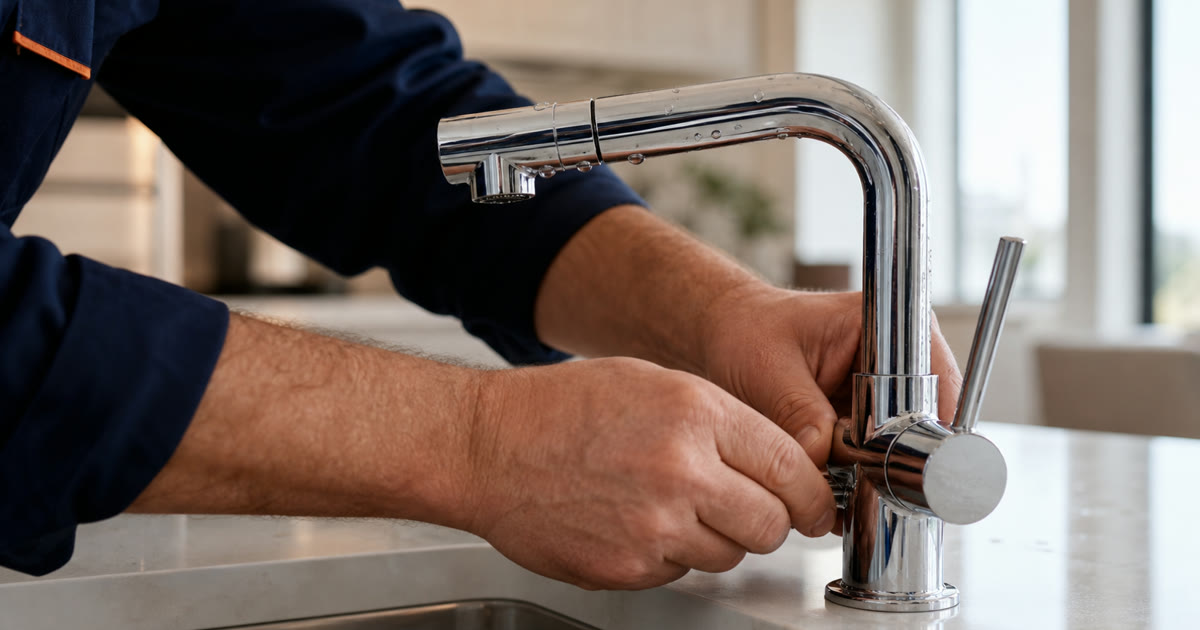
The cartridge is the part inside the handle that controls flow and temperature. It wears out — the rubber seals harden, the ceramic discs scratch — and that's what causes most drips, stiff handles, and the dreaded temperature drift where hot creeps into cold. Calgary's hard water accelerates it, packing mineral scale into the cartridge so it stiffens and leaks sooner. In most cases, a fresh cartridge brings the faucet back to like-new. If you pull an old cartridge in a Calgary kitchen and find it crusted white, that scale is the culprit — and the same scale is quietly building up in the new one, so it's worth descaling the aerator and faucet body while it's apart.
When a cartridge swap is the right call
Replace just the cartridge when:
- The faucet body is solid — no corrosion, no cracks, finish still good.
- It's a known brand (Moen, Delta, Kohler and the like) where the exact cartridge is easy to get — many carry a lifetime parts warranty, so the part may be free.
- The problem is a drip, a stiff handle, or temperature drift — classic worn-cartridge symptoms.
- The faucet is under roughly 10 years old and you like it.
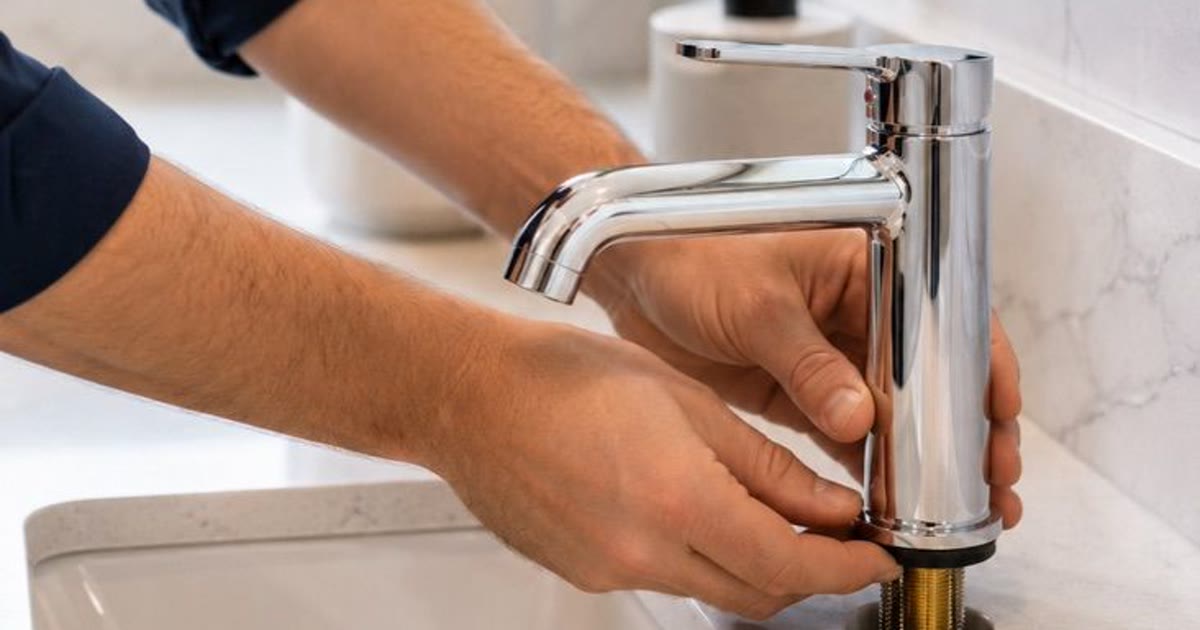
A cartridge is an inexpensive part, and the swap usually takes about half an hour. Always match the old cartridge exactly — brand and model — or take it to the store with you.
When to replace the whole faucet
Go for a new faucet when:
- The base or body is corroded, cracked, or leaking — no internal part fixes a failing body.
- It leaks from the base of the spout or where it meets the sink, not just the spout tip.
- The faucet is old, mismatched, or a no-name brand where parts are impossible to find.
- You've already replaced the cartridge and it still drips — the valve seat inside the body is likely worn or pitted.
- The finish is shot and you were going to upgrade anyway — while it's apart is the time.
In older Calgary homes — the original 1960s and 1970s bungalows in Haysboro, Acadia or Brentwood — it's common to find two-handle compression taps or discontinued single-handle models where no cartridge is made anymore. Those almost always point to a full replacement.
A mid-range faucet plus an hour of install often costs less than chasing parts for a tired unit, and you reset the clock on the whole fixture.
Quick tip: before you buy anything, find the brand stamped on the faucet and photograph it. Many cartridge-swap headaches come from someone bringing home the wrong part because they guessed the model. Five seconds with a phone saves a return trip across Calgary.
Weighing the cost
On price alone, the cartridge swap almost always wins — an inexpensive part, sometimes free under a brand warranty, against a new faucet plus the install. But cost isn't the only factor:
- Time and hassle. If you've already had the faucet apart twice for the same drip, a new fixture that simply works is often worth more than the dollars saved.
- The body's condition. Pouring money into cartridges for a corroded faucet is good money after bad — the body is the part that won't last.
- Water quality. Calgary's hard water shortens cartridge life in every brand. If you're replacing the whole faucet, a model with a ceramic-disc cartridge and a readily available replacement part makes future repairs quick and cheap.
- Age and style. A 15-year-old builder-grade tap you've never loved is a different decision than a quality faucet that's two years old.
When the body is sound and the brand is good, repair. When the body's failing or the part is a wild goose chase, replace — and reset the clock on the whole fixture.
Related Calgary Home Guides
- First Frost in Calgary: The Deadline for Your Outdoor Faucet
- Frozen Outdoor Faucet: Hidden Damage You Won't See Until Spring
- How to Fix a Dripping Faucet (Step-by-Step DIY)
Frequently Asked Questions
How do I know if my faucet cartridge is bad?
The classic signs are a drip from the spout, a handle that has turned stiff, or temperature drift where hot creeps into cold. In Calgary, hard-water scale inside the cartridge often speeds this up.
How much does a faucet cartridge cost?
A replacement cartridge is usually an inexpensive part, and many major brands cover cartridges under a lifetime parts warranty. Match the brand and model exactly, or bring the old one to the store.
Why is my faucet still dripping after I replaced the cartridge?
If a new, correctly matched cartridge doesn't stop the drip, the valve seat inside the faucet body is likely worn or pitted. At that point, replacing the whole faucet is usually the better fix.
Is it worth repairing an old faucet?
If the body is solid and it's a known brand with easy-to-find parts, yes. If the body is corroded or cracked, it leaks at the base, or parts are impossible to find, a new faucet is the smarter spend.
A quick decision guide for Calgary homeowners
- Drip from the spout + good body + known brand → new cartridge.
- Leak at the base or sink deck → new faucet.
- Corroded or cracked body → new faucet.
- New cartridge didn't fix it → new faucet (or worn valve seat).
Dripping spout, stiff handle, or a faucet leaking under the sink? Not sure whether to repair or replace? YOFF faucet and cartridge service sorts it out across Calgary: our technician matches the cartridge right the first time or installs a new faucet, and tells you straight which one yours needs. Get a free quote — No Fix, No Fee.
Rather have YOFF handle it?
We cover faucets and more across Calgary and nearby communities — booked fast, done right. No Fix — No Fee.